


Pi Network Validator Rewards: How Much Can You Earn? Timeline & Distribution

Pi Network validator rewards are becoming an increasingly important topic as the network expands its KYC verification system and moves closer to broader adoption. Unlike traditional blockchain models that rely on mining or staking, the Pi Network validator rewards system is built around user participation in identity verification, making it a unique form of blockchain validator incentives.
Many users are now asking key questions: how much can Pi Network validators earn, how are rewards calculated, and when are those rewards actually distributed? Because earnings are activity-based rather than fixed, understanding the mechanics behind how Pi Network validators earn rewards is essential before participating.
This guide provides a complete breakdown of Pi Network validator rewards explained, including earnings potential, reward calculation, validator requirements, and the full reward distribution timeline. Whether you are evaluating participation or simply exploring how the system works, this article will help you make a more informed decision. Tools like Bitget Wallet can also help users track their assets and stay organized as they participate in different crypto ecosystems.
Key Takeaways
- Pi Network validator rewards depend on validation activity and accuracy, and earnings are not fixed, varying based on participation
- Only users who meet Pi Network validator requirements can participate, as validator access is system-controlled and limited
- Rewards are distributed based on network phases and processing, so users should evaluate earnings vs risks before participating
How Much Can You Earn from Pi Network Validator Rewards?
Pi Network validator rewards are not designed as a fixed-income system. Instead, earnings are tied to how actively and accurately users participate in validation tasks. This means there is no guaranteed return, and income can vary significantly between users.
Unlike traditional crypto validator rewards, Pi Network uses a task-based model focused on identity verification rather than block production.
Source: IQ.wiki
How much can Pi Network validators earn?
The answer to how much can Pi Network validators earn depends on activity level and system allocation. Based on available user reports and platform guidance, validators typically earn a small fraction of Pi per validation task, often ranging from ~0.01 to 0.1 Pi per successful validation. This also means that Pi Network validator rewards differ from traditional Pi Network node rewards, which are typically tied to node operation rather than identity validation.
- rewards are earned per validation task (~0.01–0.1 Pi per validation)
- no fixed APY or predictable income stream
- active users completing multiple validations daily may earn ~0.5 to 3 Pi per day (estimated)
Because the system is still evolving, Pi Network validator rewards 2026 may change depending on network development, validation demand, and token economics. These figures are indicative rather than guaranteed, as actual earnings vary across users.
What affects total validator earnings?
Total earnings in the Pi Network validator rewards system are not determined by a single factor but by a combination of user behavior and network demand. Because rewards are activity-based, understanding how Pi Network validators earn rewards requires looking at both participation levels and performance quality. This means that simply completing more tasks is not enough—accuracy and consistency also play a critical role in maximizing rewards.
Several variables determine total earnings:
- number of validations completed
- accuracy and consistency in decisions
- overall demand for KYC verification
Higher participation can increase rewards, but sustained accuracy is essential for maintaining earning potential within the Pi Network validator rewards system.
How Are Pi Network Validator Rewards Calculated?
The Pi Network validator rewards system uses a task-based model where users earn rewards by completing identity verification instead of validating blocks. Rewards depend on participation and performance rather than fixed returns. Understanding this system is key to knowing how Pi Network validators earn rewards.
How the Pi Network validator rewards system calculates rewards
Rewards in the Pi Network validator rewards system are generated through user participation in validation tasks. Instead of mining or staking, users earn based on completed and successful identity verifications. This makes the system dependent on real activity rather than passive holding. Unlike standard Pi Network node rewards, this model focuses on task-based participation instead of infrastructure contribution.
- users review and verify identity submissions
- successful validations contribute to reward allocation
- rewards are distributed based on performance
What factors affect Pi Network validator reward calculation
Actual reward outcomes vary depending on how consistently and accurately users participate. Understanding these factors helps explain how Pi Network validators earn rewards and why earnings differ between users.
- validation accuracy
- participation frequency
- internal trust or scoring system
Pi Network Validator Requirements: Who Can Become a Validator?
Not all users can participate in the validator system, as access is restricted by the network. The Pi Network validator requirements are designed to ensure that only verified and eligible users contribute to identity validation. Understanding these conditions is essential before exploring how to participate.
Pi Network validator requirements
To become a validator, users must meet basic eligibility conditions set by the network. These requirements focus on identity verification and active participation within the ecosystem.
- users must complete KYC verification
- maintain an active Pi Network account
Pi Network validator eligibility and access
Meeting the requirements does not guarantee access to the validator role. The system controls participation to maintain quality and manage validation demand.
- validator roles are system-controlled
- availability depends on network demand
How to Become a Pi Network Validator
Understanding how to become a Pi Network validator requires recognizing that the process is not fully open or permissionless, unlike a typical Pi Network node setup where users can participate more directly.
How validator roles are assigned
Validator roles in Pi Network are assigned through the KYC validator program, where access is enabled by the system rather than through open application. Users are typically selected after meeting eligibility conditions and when the network requires additional validators.
- system enables validator access through the KYC validator feature
- selection depends on eligibility, activity level, and network demand
How access to the validator role is granted
Access to the validator role is granted only after users complete KYC and are approved by the system. Even eligible users may not receive access immediately, as the number of validators is limited and controlled.
- KYC completion and approval are required
- access is limited and depends on system availability
How validation begins after access is granted
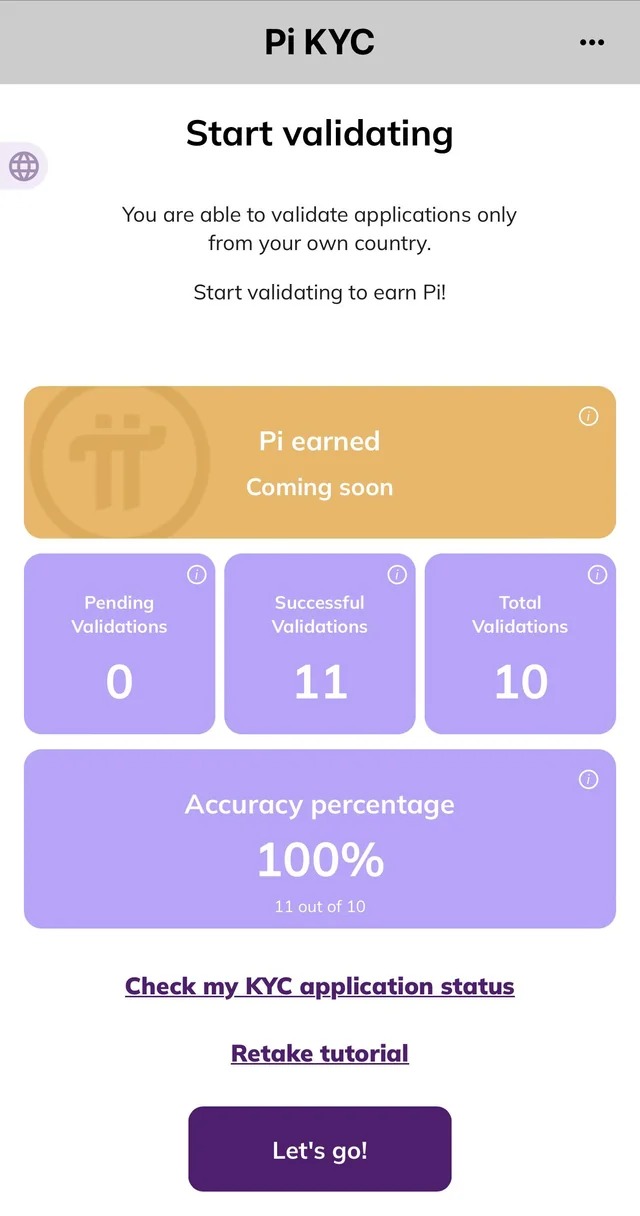
Once access is enabled, users can start performing KYC validation tasks within the app. Validators review identity submissions and confirm whether the provided data matches the user’s information. This is where users transition from eligibility to participation and begin contributing to both validation tasks and the broader Pi Network node rewards ecosystem.
- access the KYC validator interface inside the Pi app
- review and verify identity submissions submitted by other users
Source: Reddit
When Are Pi Network Validator Rewards Distributed?
Reward distribution in Pi Network is not always immediate and follows a structured internal process rather than real-time payouts. Unlike traditional crypto validator rewards, where earnings can be distributed continuously, the Pi Network validator rewards system relies on batch processing and network conditions. This means users may experience delays between completing validation tasks and receiving rewards. Understanding the distribution timing is important for setting expectations and evaluating how Pi Network validator rewards are actually delivered.
When do validators receive rewards?
Validators receive rewards based on system processing rather than instantly after each task. Distribution is typically handled in batches, which can result in delays depending on network activity.
- after batch processing
- delays depending on system updates
What affects reward distribution timing?
The timing of Pi Network validator rewards depends on several operational factors within the network. These conditions influence how quickly rewards are processed and credited.
- KYC backlog
- network phase (testnet vs mainnet)
This reflects the Pi Network validator rewards latest update, where distribution remains dependent on system processing and network conditions.
Are Pi Network Validator Rewards Worth It? Earnings vs Risks
Evaluating whether Pi Network validator rewards are worth it requires balancing potential earnings against effort, access limitations, and uncertainty. Unlike traditional crypto validator rewards, returns are not fixed and depend on user participation within the system. Understanding both benefits and risks helps users make a more informed decision.
Source: IQ.wiki
Benefits of being a validator
Being a validator allows users to actively participate in the network while earning rewards. It also provides early exposure to the ecosystem and contributes to maintaining decentralized network security.
- earn Pi through participation
- contribute to network security
- gain early involvement in ecosystem development
Risks and limitations
Despite the potential benefits, there are several limitations that users should consider before participating. These risks can affect both earning potential and overall user experience.
- rewards have uncertain real-world value
- validator access is limited
- earnings may be relatively small
Earnings vs risks of Pi Network validator rewards
Comparing earnings and risks helps users understand whether participation aligns with their expectations. Because rewards are activity-based, the outcome depends heavily on individual effort and network conditions.
| Aspect | Earnings | Risks |
| Reward structure | activity-based rewards | no fixed or guaranteed returns |
| Income potential | increases with participation | may remain relatively low |
| Value | potential future upside | uncertain real-world value |
| Effort required | consistent validation needed | time may outweigh rewards |
Conclusion
Pi Network validator rewards offer a unique model compared to traditional blockchain systems. Instead of relying on staking or mining, rewards are tied to real user activity and identity verification. This distinguishes it from traditional Pi Network node rewards, which rely more on technical node operation than user validation.
However, earnings remain variable, and participation is limited by system-controlled access. Users should carefully evaluate the balance between effort and potential reward before deciding to participate. As the ecosystem grows, Pi Network validator rewards 2026 may become more structured with improved distribution efficiency.
If you want to track and manage your validator rewards efficiently, Bitget Wallet allows you to monitor your assets, manage tokens, and interact with multiple networks in one place. Users should also monitor the Pi Network validator rewards latest update to stay informed about changes in reward structure and distribution.
Sign up Bitget Wallet now - grab your $2 bonus!
FAQs
1. What are Pi Network validator rewards?
Pi Network validator rewards are incentives given to users who verify identity data within the network. These rewards are based on participation and accuracy within the Pi Network validator rewards system.
2. How much can Pi Network validators earn?
Earnings vary depending on activity, accuracy, and validation demand, with no fixed income. The amount a user earns depends on how actively they participate and how consistently they perform validation tasks.
3. How to become a Pi Network validator?
Users must complete KYC and be selected by the system before accessing validation tasks. The process is not fully open, as validator roles are assigned based on eligibility and system conditions.
4. When are Pi Network validator rewards distributed?
Rewards are distributed in batches rather than instantly after each validation task. The timing depends on system processing, network phase, and validation workload.
5. Is Pi Network validator worth it?
It depends on participation level, effort, and expectations regarding future value. Users should evaluate the balance between potential earnings and the time required for validation tasks.
Risk Disclosure
Please be aware that cryptocurrency trading involves high market risk. Bitget Wallet is not responsible for any trading losses incurred. Always perform your own research and trade responsibly.

 Arc Wallet Guide: How to Get Started With Arc in Bitget Wallet2026-09-19 | 5 mins
 What Is a Crypto Bridge? How to Move Crypto Between Blockchains2026-09-04 | 3 mins



